
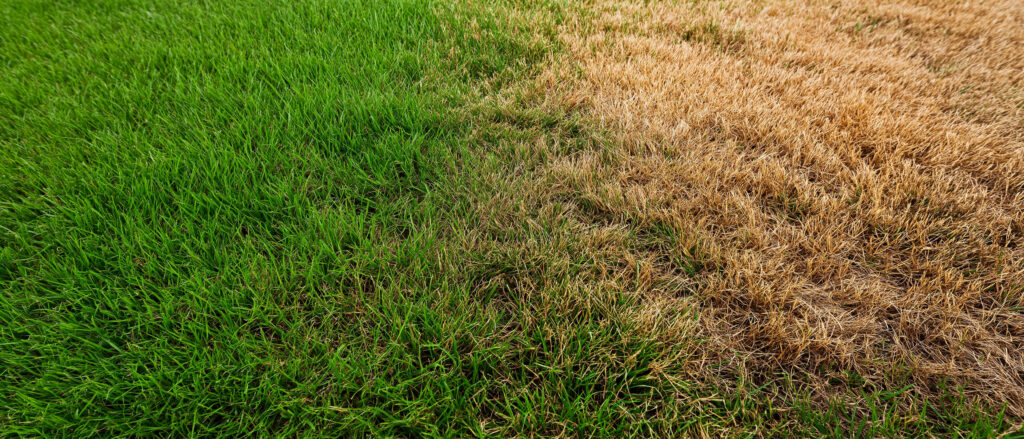
By August, commercial landscapes across Greater Memphis have already endured months of intense heat, humid nights, sudden thunderstorms and dry stretches. These conditions can expose commercial properties to late-summer landscape problems like weak irrigation coverage, stressed turf, drainage problems and declining plants that looked healthy earlier in the season.
Some late-summer damage is temporary. Other issues can carry into fall, increase replacement costs or interfere with important seasonal work. Property managers should watch for these warning signs before Memphis temperatures begin to moderate.
1. Brown or Thinning Turf
Brown turf in August does not always need more water. On Memphis commercial properties, late-summer damage may be caused by drought stress, uneven irrigation, disease, insects, compaction or mowing stress.
The turf species makes a difference. Tall fescue is a cool-season grass, so Memphis heat and humidity can leave it thin, brown or vulnerable to brown patch by late summer. Bermudagrass and zoysiagrass are better suited to summer heat, but they can still struggle because of irrigation failures, insects, poor drainage or heavy traffic.
Before extending sprinkler run times, check the pattern of the damage, soil moisture and turf type. More water may help a dry area, but it can make disease or saturated soil worse.
2. Irrigation Problems Exposed by Memphis Heat
August is often when irrigation problems become impossible to overlook. A system may technically be running while parts of the property still receive too little or too much water.
Watch for:
- Curved or circular brown areas in turf
- Water spraying onto sidewalks, roads or parking lots
- One zone staying soggy while another wilts
- Dry plants beside healthy plants in the same bed
- Irrigation running during or shortly after a summer storm
A damaged head, blocked spray pattern, mismatched nozzle or programming problem can create uneven coverage. Simply increasing the run time may waste water and cause runoff without reaching the dry area.
Irrigation repairs are especially important before fall fescue overseeding, seasonal color installation or new planting.
3. Standing Water After Heavy Summer Storms
Memphis can experience intense rainfall followed by hot, dry weather. On compacted commercial sites, stormwater may collect in turf, planting beds or low areas instead of soaking into the soil.
Standing water can reduce oxygen around roots and contribute to:
- Thin or yellow turf
- Declining shrubs
- Root problems
- Washed mulch
- Mud on sidewalks
- Erosion near drains and pavement
Common causes include poor grading, compacted soil, clogged drains, roof runoff and irrigation leaks. Property managers should document where water collects after storms and how long it remains.
Replacing turf or plants without correcting the drainage problem often leads to the same failure again.
4. Armyworms, Grubs and Other Turf Insects
Late summer is an important scouting period for turf insects in Tennessee. Armyworms may cause rapid blade damage, while white grubs feed below the soil surface and weaken turf roots. Chinch bugs may also damage warm-season turf during hot, dry conditions.
The symptoms can look similar to drought, disease or irrigation failure. Watch for:
- Turf that suddenly looks frosted or chewed
- Expanding brown areas
- Heavy bird activity
- Grass that pulls away easily because roots are damaged
- Brown turf that does not improve after irrigation
Treatment should follow pest identification and confirmation of active insects. Treating every brown patch as an insect problem can waste money and delay the correct solution.
5. Persistent Summer Weeds
By August, weeds such as nutsedge, kyllinga, crabgrass, Dallisgrass, and Virginia buttonweed may be mature and highly visible.
These weeds can also reveal underlying site problems:
- Nutsedge and kyllinga often thrive in wet or compacted areas.
- Crabgrass commonly fills thin turf and hot areas near curbs or sidewalks.
- Virginia buttonweed often spreads in moist turf and poorly drained areas.
Spot treatment may improve appearance, but lasting control also requires attention to irrigation, drainage, mowing height and turf density. Some established weeds may require repeat treatments rather than a single visit.
August is also the time to begin planning fall preemergent applications for winter annual weeds in bermudagrass and zoysiagrass.
6. Heat-Stressed Trees and Shrubs
Late-summer heat often reveals tree and shrub problems that developed earlier in the year. Property managers may notice scorched leaf edges, early leaf drop, thinning canopies, wilt or branch dieback.
On Memphis properties, these symptoms may be associated with:
- Drought stress
- Overwatering
- Poor drainage
- Compacted root zones
- Planting too deeply
- Mulch piled against trunks
- Insects or disease
- Construction or mower damage
A fertilizer or pesticide application is not automatically the right response. The root zone, drainage, irrigation pattern, plant species and maintenance history should all be considered before treatment.
7. Declining Seasonal Color and Entry Beds
Summer annuals around entrances, monument signs and customer-facing areas can begin to look tired by late August. Reflected heat from pavement, irrigation inconsistencies, crowded roots and prolonged humidity can reduce flowering and create uneven displays.
This is a good time to evaluate:
- Which beds performed well
- Where irrigation coverage was inadequate
- Whether plant choices matched the light and heat exposure
- Which high-visibility areas should be updated for fall
- Whether drainage or soil preparation is needed before replanting
Planning early helps reduce the period between declining summer color and the next seasonal installation.
Prepare Memphis Landscapes for Fall
Late summer is not only a time to correct visible problems. It is also the planning window for several important fall services in the Memphis area.
Depending on the property, those priorities may include:
- Tall fescue aeration and overseeding
- Irrigation repair before seeding
- Fall fertilization based on turf needs
- Winter annual weed prevention
- Fall seasonal color
- Drainage correction
- Tree, shrub and bed enhancements
Waiting until cooler weather arrives can make scheduling more difficult and may leave little time to correct irrigation or soil problems before installation.
Landscape Services Group provides customized commercial landscape maintenance, turf care, irrigation system maintenance, seasonal color and landscape enhancements for Memphis-area properties. A property review today can help identify late-summer landscape problems and establish the right priorities for fall.