
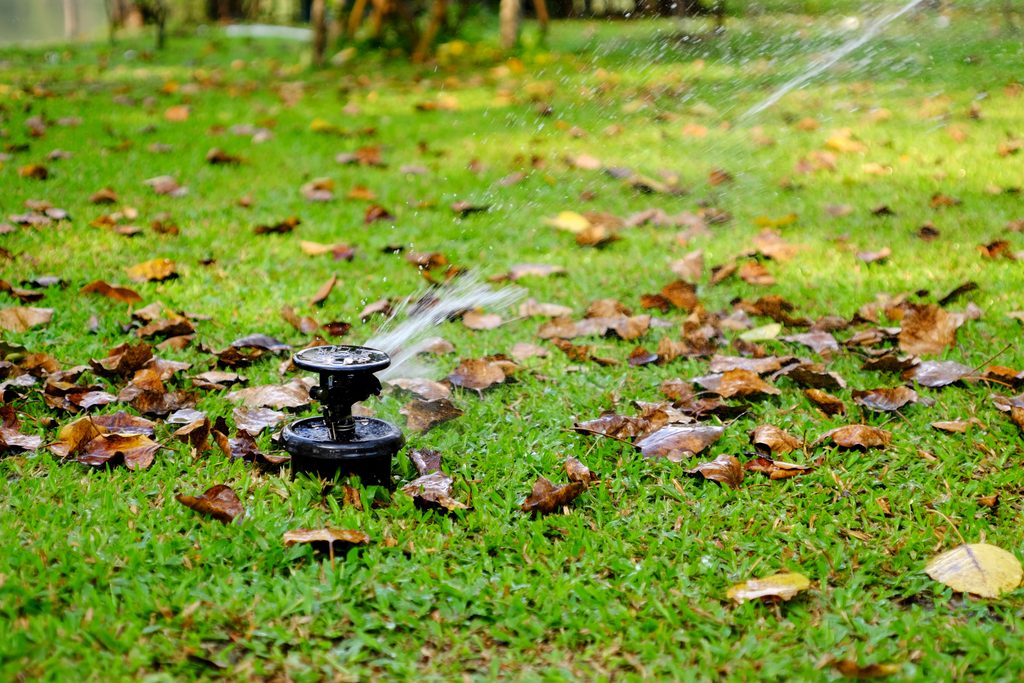
Commercial landscapes need less water as temperatures cool, daylight decreases and plant growth slows. However, that does not mean irrigation systems should be turned off as soon as fall arrives.
In Greater Memphis, warm weather can continue well into the season, and rainfall may vary from week to week. Newly overseeded tall fescue, seasonal color and recently installed trees or shrubs may also need regular moisture after established turf and plants require less.
The right fall irrigation plan reduces unnecessary water use without allowing new or valuable plant material to dry out.
Move Away From the Summer Watering Schedule
Commercial irrigation systems often run more frequently during summer to help landscapes manage high temperatures and periods of limited rainfall. Continuing that same schedule into fall can provide more water than the property needs.
Excess irrigation may lead to:
- Saturated soil
- Water running onto sidewalks or parking lots
- Displaced mulch and soil erosion
- Increased turf and plant disease
- Shallow root growth
- Unnecessary water use
- Soft turf that is easily damaged by traffic or equipment
As fall temperatures arrive, reduce irrigation based on actual plant demand, rainfall and soil moisture. Avoid making adjustments based only on a fixed date. Conditions can differ considerably between a shaded office campus, an exposed retail center and an irrigated HOA common area.
Continue Watering Newly Overseeded Tall Fescue
Newly seeded tall fescue has different needs from established turf. During germination, the seedbed generally needs light, consistent moisture so it does not dry out.
Once the grass has germinated and begins establishing, watering should gradually shift from frequent, light applications to less frequent and deeper watering. This encourages roots to grow farther into the soil.
Reducing irrigation too quickly can weaken new turf. However, keeping the soil constantly saturated can also create problems, including shallow rooting and greater disease risk.
Property managers should also watch for uneven coverage. Dry areas may indicate:
- Misaligned sprinkler heads
- Clogged nozzles
- Low water pressure
- Incorrect run times
- Poor head spacing
- Sloped or compacted soil
- Damage from mowing equipment or vehicles
These problems should be corrected rather than compensated for by increasing the watering time across an entire irrigation zone.
Support New Trees, Shrubs and Seasonal Color
Fall is often a good time to install trees and shrubs in the Memphis area because cooler temperatures reduce heat stress while the soil may remain warm enough for root development. New plants still need dependable moisture during establishment, even when their leaves are dropping or aboveground growth has slowed.
Fall seasonal color also requires regular attention. Shallow-rooted flowers and plants in containers can dry out more quickly than established shrubs, especially in sunny or windy areas.
Instead of watering the entire property equally, irrigation should be matched to the needs of each landscape zone. Turf, annual flowers, mature shrubs and newly installed trees should not automatically receive the same schedule.
Account for Rainfall and Soil Conditions
Fall rainfall does not always eliminate the need for irrigation. A brief shower may wet the soil surface without providing enough moisture to reach the root zone. On the other hand, several rainy days may leave heavy or compacted soil wet for an extended period.
Checking soil moisture provides more useful information than relying only on how the landscape looks from a distance. Wilting, yellowing or thinning plants can result from either too little or too much water.
Rain sensors and smart irrigation controllers can help prevent unnecessary watering after storms, but they still need to be inspected and programmed correctly. A sensor that is blocked, damaged or poorly located may not respond as intended.
Look for Runoff and Drainage Problems
Fall is a useful time to inspect how irrigation water moves across the property. Water should soak into the soil rather than flow across pavement, collect near building foundations or carry mulch into storm drains.
Runoff may indicate:
- Watering cycles that are too long
- Compacted soil
- Poor grading
- Broken or tilted sprinkler heads
- Overspray onto hard surfaces
- Soil that absorbs water slowly
- Irrigation occurring too soon after rainfall
Dividing one long irrigation cycle into shorter intervals may help some soils absorb water more effectively. Persistent standing water or erosion may require a broader drainage or grading evaluation.
Adjust Irrigation for Dormant Warm-Season Turf
Bermudagrass and zoysiagrass begin slowing down as temperatures decline and eventually enter dormancy after frost. Once active growth stops, these grasses typically require much less supplemental water than they did during summer.
Irrigation should not be used to keep warm-season turf green after it naturally enters dormancy. Late, excessive watering can keep soil unnecessarily wet and contribute to disease or drainage concerns.
Dormant turf may still need occasional moisture during extended dry periods, but watering decisions should account for current weather, soil conditions and the needs of nearby plants sharing the same zone.
Inspect the System Before Winter
Before irrigation use declines for the season, inspect the system for problems that should be corrected before spring.
Check for:
- Broken or leaking heads
- Water spraying onto sidewalks or buildings
- Zones that do not operate correctly
- Damaged valves or exposed components
- Poor coverage around newly seeded areas
- Controllers still programmed for summer conditions
- Low areas that remain wet after watering
Fall is also the time to begin planning for seasonal shutdown or winterization where appropriate. Memphis winters are generally milder than those in northern climates, but freezing conditions can still damage exposed irrigation components. The timing and level of preparation should be based on the system’s design and the property’s conditions.
Use a Site-Specific Fall Irrigation Plan
There is no single fall watering schedule that works for every commercial landscape. Sun exposure, soil type, plant material, drainage, rainfall and recent improvements all affect how much water each area needs.
A professional irrigation assessment can help property managers reduce waste while protecting newly seeded turf, seasonal color and valuable trees and shrubs. Contact LSG today to review your commercial irrigation system and prepare your Memphis-area landscape for the transition into winter.