
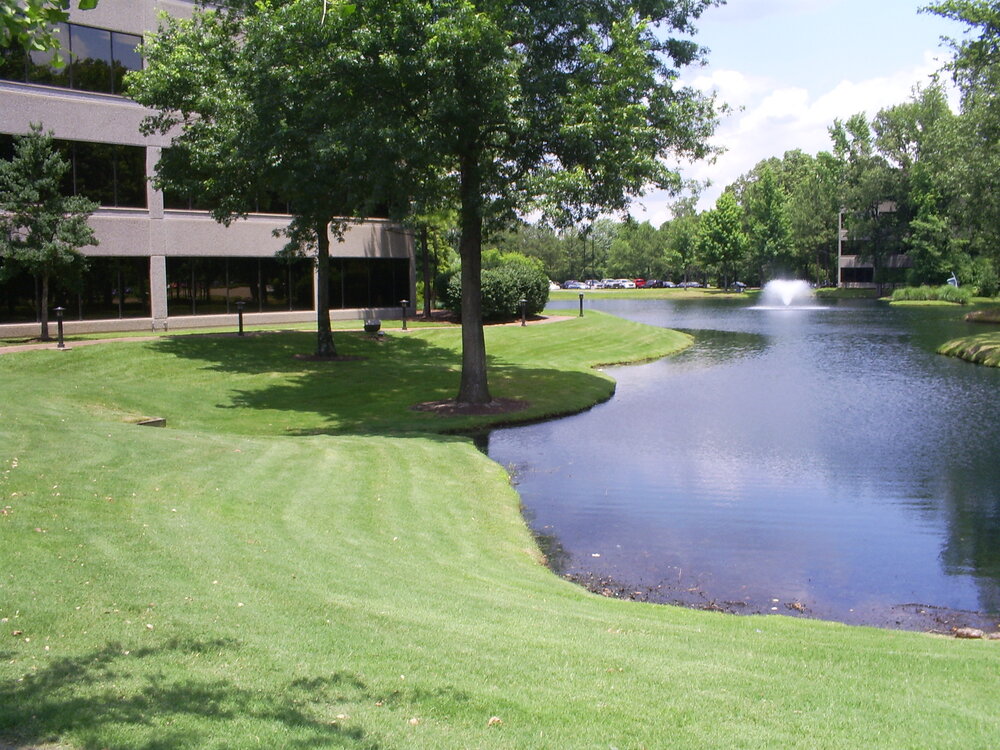
A year-end landscape walkthrough helps commercial property managers identify what worked, what needs attention and what should be included in next year’s budget.
In Greater Memphis, November offers a useful opportunity to evaluate the landscape as summer growth slows and leaves begin to fall. Problems hidden by dense foliage may become easier to see, while recent maintenance needs are still fresh.
Walking the property with your landscape account manager can turn those observations into a clear plan.
Review Turf Performance
Start with areas that struggled throughout the growing season. Look for thin turf, bare soil, worn paths and spots that repeatedly became too wet or too dry.
The goal is to identify the cause before scheduling another repair. Turf beneath mature trees may struggle with shade and root competition. Areas near sidewalks may experience concentrated foot traffic. Low spots may need drainage improvements before new grass can succeed.
Consider the turf type, too. Bermuda and zoysia naturally lose color as they enter dormancy, while tall fescue may remain green and continue growing during mild weather. Seasonal browning alone does not mean turf needs replacement.
Evaluate Trees, Shrubs and Landscape Beds
Look for missing plants, declining shrubs and beds that required repeated attention during the year.
Questions to discuss include:
- Have plants outgrown their space?
- Are shrubs blocking windows, signs or walkways?
- Do certain plants repeatedly struggle despite regular care?
- Are tree trunks buried beneath excess mulch?
- Are beds becoming difficult to maintain?
Some concerns can be addressed through routine maintenance. Others may call for selective replacement or a revised planting design.
Avoid treating the walkthrough as a reason to prune everything immediately. Pruning timing should depend on the plant species, flowering habits and condition.
Look for Drainage and Irrigation Problems
Make note of standing water, eroded soil, displaced mulch and sediment collecting on pavement. If possible, inspect problem areas after rainfall to see how water moves through the property.
Review irrigation performance with your landscape team as well. Recurring dry spots, leaks and overspray should be documented for repair or further evaluation.
Correcting the underlying problem can prevent another cycle of damaged plants, turf replacement and unnecessary water use.
Assess Entrances and High-Visibility Areas
Walk the property from a visitor’s perspective. Start at the main entrance, then follow the routes used by customers, employees, tenants or residents.
Consider whether landscaping frames entrances clearly, signs remain visible and beds look intentional. Identify locations where a small improvement could make a noticeable difference, such as replacing declining shrubs or refreshing a prominent seasonal display.
Include walkways and gathering areas in the review. Encroaching plants, uneven surfaces and poor drainage should be flagged for the appropriate maintenance professional.
Separate Maintenance Needs From Larger Improvements
Before ending the walkthrough, organize findings into practical priorities:
- Immediate attention: Active leaks, blocked drainage or plant material obstructing access.
- Routine maintenance: Leaf cleanup, bed care and appropriately timed pruning.
- Planned improvements: Drainage corrections, plant replacement, turf renovation or entrance updates.
Document locations with photos and agree on the next step for each item. Confirm which work falls within the existing maintenance agreement and which projects require a separate proposal.
A useful walkthrough ends with clear responsibilities, realistic timing and a plan that supports the property’s needs.
Contact us today to schedule a year-end landscape walkthrough with Landscape Services Group and discuss priorities for your Memphis commercial property.