
Tall fescue often looks its best during the cooler months, but Memphis summers can be difficult for this cool-season grass. Heat, humidity, drought, disease and heavy traffic may leave fescue thin or uneven by late summer.
Some turf will recover as temperatures moderate. Other areas may need aeration and overseeding to rebuild density. The key is determining whether these services address the property’s actual problems.
What Do Aeration and Overseeding Do?
Core aeration removes small plugs of soil from the turf. This helps relieve compaction and creates openings for air, water and nutrients to reach the root zone.
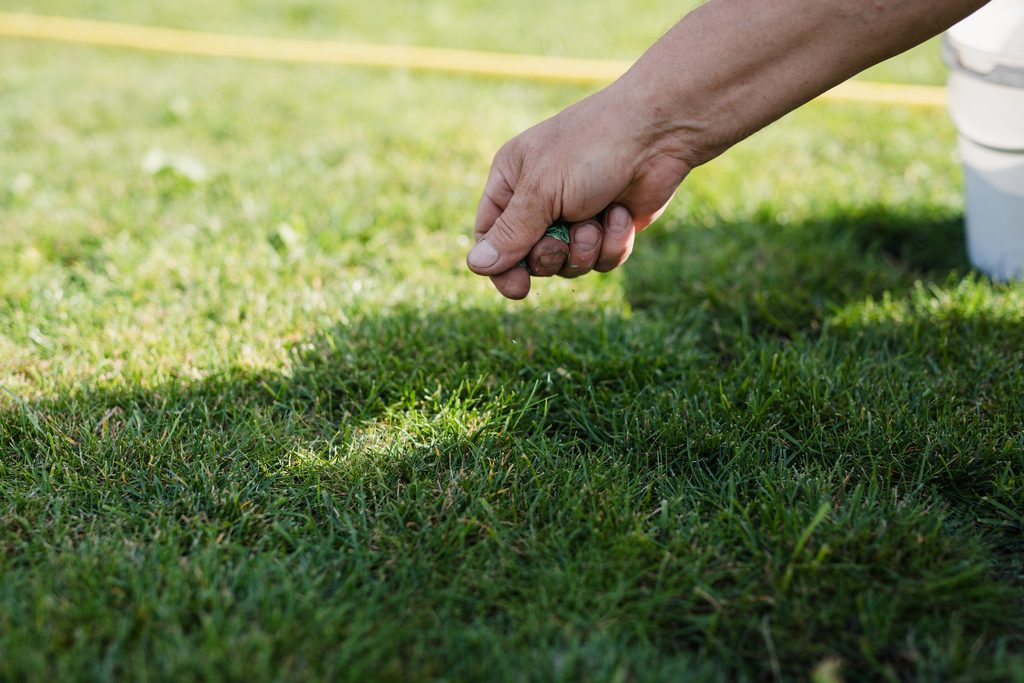
Overseeding introduces new tall fescue seed into an existing lawn. Because tall fescue grows in bunches rather than spreading aggressively, thin areas typically do not fill themselves as quickly as spreading grasses.
When performed together, aeration and overseeding can improve seed-to-soil contact and help establish new grass in weak areas.
Signs Your Tall Fescue May Need Aeration
Compacted soil limits root growth and prevents water from moving into the ground effectively. Aeration may be appropriate when:
- The soil feels hard or dense
- Water runs off instead of soaking in
- Turf thins along sidewalks or entrances
- The property receives heavy foot or equipment traffic
- Grass struggles even with appropriate watering
- Bare areas develop along common travel routes
Commercial landscapes are especially vulnerable to compaction from mowing equipment, construction activity, pedestrian traffic and repeated use of the same access routes.
Aeration is not automatically needed everywhere each year. Turf growing in loose, healthy soil with limited traffic may require it less frequently than heavily used areas.
Signs Your Tall Fescue May Need Overseeding
Tall fescue may benefit from overseeding when the lawn has lost density but can still support healthy turf.
Common signs include:
- Thin or patchy growth
- Bare areas after summer
- Weeds filling open spaces
- Reduced turf density in high-traffic areas
- Damage from drought, insects or disease
- An uneven appearance across the property
Overseeding can add desirable grass plants, but it will not correct an unresolved problem. New seedlings may fail if the area still has poor irrigation, heavy shade, standing water, active disease or constant foot traffic.
Why Fall Timing Matters in Memphis
Late summer through early fall is generally the best window for tall fescue renovation in Memphis. Temperatures begin to moderate, but the soil remains warm enough to support seed germination.
Fall also gives young fescue time to establish roots before winter and the following summer. Spring seeding may work for small repairs, but new grass then faces weed competition and Memphis heat before developing a mature root system.
The exact schedule should reflect current weather, soil conditions and the time available for seedlings to establish.
Irrigation Is Essential After Overseeding
New fescue seed must remain consistently moist during germination. This often requires light, frequent irrigation at first. As the seedlings develop, watering should gradually shift toward deeper and less frequent applications.
Before overseeding, inspect the irrigation system for:
- Blocked or damaged sprinkler heads
- Uneven coverage
- Dry spots
- Runoff
- Leaks
- Overspray onto pavement
Simply increasing the run time will not correct a tilted head, clogged nozzle or poor coverage pattern.
Coordinate Overseeding With Weed Prevention
Fall is also an important time to prevent winter annual weeds in warm-season turf. However, some preemergent products can interfere with the establishment of tall fescue seed.
Property managers should coordinate overseeding and weed-control plans carefully. Product labels, application areas and timing must be reviewed before either service begins.
Determine the Cause Before Renovating
Aeration and overseeding work best when they are part of a broader turf plan. Before scheduling work, determine why the fescue became thin.
The property may also need:
- Irrigation repairs
- Soil testing
- Drainage improvements
- Traffic redirection
- Shade management
- Disease or insect treatment
- A different solution for areas that cannot support turf
Landscape Services Group helps commercial properties across Greater Memphis evaluate turf conditions and determine where fall aeration and overseeding may be appropriate. Contact LSG to discuss a customized turf maintenance plan for your property.